
Description
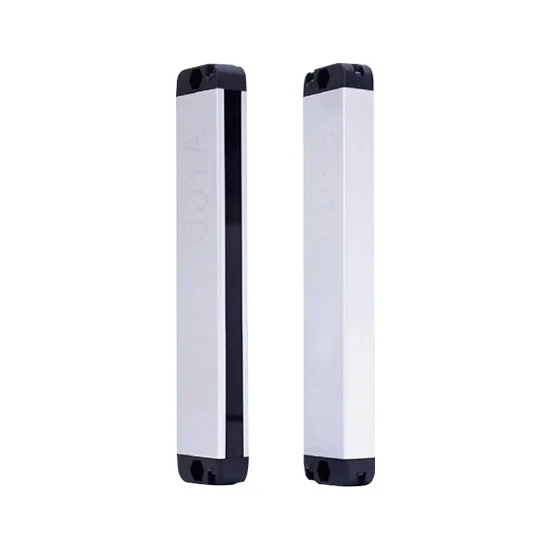
Light curtain sensors come with IP55 protection, optical axis distance of 10mm, and 20mm, working at -10°C – 55°C. With perfect self-inspection function, and optical interference ability.
Specification
| Model | ATO-AY20B |
| Working power | DC12-24V |
| Output type | Transistor output (NPN/PNP) |
| Maximum output current | 100mA |
| Power consumption | <3W |
| Operating temperature | -10°C-55°C |
| Environment humidity | 20°C, RH<95% (no condensation) |
| Response time | 3ms-18ms |
| Insulation resistance | >100MQ |
| Dielectric strength | AC 1500V, 60s |
| Anti-light interference | 10000Lux incident angle>5° |
| Emitting light source | Infrared 940nm |
| Shell material | Aluminum alloy |
| Protection level | IP55 |
| Optical axis distance | 10mm, 20mm |
| Protection length | 0.2-2m (regular shooting distance, others can be customized) |
| Protected altitude | Protected height H= (xx-1) X-ray axis distance, xx is the number of beams |
Feature
- The light curtain sensor has a direct outlet, eliminating the vulnerability caused by the plug.
- The safety light curtain is stable and has fast signal transmission, saving space.
- The performance of the curtain sensor chip is stable, the reserved hole is easy to install, and the blind area of the bonding machine is smaller.
- With the same installation space, AY20B has a smaller dead zone than traditional grating with a plug.
- With complete specifications and models, the safety light curtain sensor is easy installation and simple wiring.
- With perfect self-inspection function, and optical interference ability.
- Strong vibration resistance, excellent waterproof and dustproof performance.
- Installed with dual CPU processors, which can be directly connected to the line.
- Safe and reliable NPN or PNP signal output, and using line synchronization technology, easy wiring.
Size
Wiring diagram
Tips: How to maintain a safety light curtain sensor?
- Regular inspection is the basis for ensuring the normal operation of the safety light barrier. Every once in a while, conduct a comprehensive inspection of the safety grating. Pay special attention to checking whether the external structure of the grating has bumps, deformation, etc., to ensure that the grating can work normally.
- Careful examination of the connection line is the key to solving the fault of the safety grating. Check the status of the connecting line, including whether there are problems such as poor contact, short circuit, grounding, and line aging. For long-term use of the safety grating, it is recommended to replace the line regularly.
- Attention to detail can help resolve some common safety light barrier failures. For example, in a rainy or humid environment, you can install a rain cover to prevent water or moisture from affecting the grating.
Reviews
There are no reviews yet.