
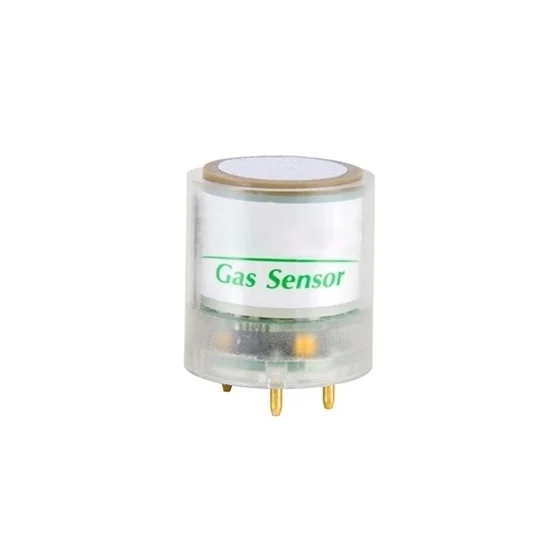
Description
PH3 gas sensor with 0-20ppm detecting range. Precision is ±5%FS, resolution is 0.1ppm. Can be operated with electric heat unplugging, factory accurate calibration, the use of no need to re-calibrate. It can be used for phosphine detector, industrial site phosphine gas detection, intelligent municipal phosphine detection, electric power phosphine detection.
Module Features
- Supports electric hotplugging and unplugging for seamless operation.
- Comes factory-calibrated with high accuracy, eliminating the need for recalibration before use.
- Provides both simultaneous digital (UART) and analog outputs for enhanced usability.
- Utilizes the standard MODBUS communication protocol for easy integration.
- Compatible with various sensors, including infrared, electrochemical, catalytic, semiconductor, and others.
Specification
| Model | ATO-K-5S-PH3-20PPM |
| Detecting Gas | PH3 |
| Detecting Range | 0-20ppm |
| Working Voltage | DC 5V±0.5V |
| Power Consumption | ≤1W |
| Working Temperature | -20℃~50℃ |
| Humidity | 15%~95%RH (no condensation) |
| Working Pressure | 86~106Kpa |
| Adoption Method | Natural diffusion |
| Detection Unit | ppm |
| Resolution | 0.1ppm |
| Technical Principle | Electrochemical three electrodes |
| Tolerance | ≤±3% |
| Repeatability | ≤±1% |
| Response Time | ≤60s |
| Communication Format | UART baud rate 9600, data bit: 8; stop bit: 1; check bit: none |
| Communication Protocol | Modbus-RTU communication protocol |
| Analog Output | 0~3V |
| Warm-up Time | 30s (user adjustable) |
| Lifetime | 2 years |
| Weight | 10g |
Structure
Note: Tolerance range ±0.25mm
Working Principle
The signal of the gas sensor is amplified and filtered, and then the microprocessor performs theoretical calculations on the signal and outputs a digital signal. For different sensors, the filtering and amplifying circuits are also different.
Application
Tips: Sensor Shows Constant Zero or Maximum Reading
Possible Causes
- Sensor saturation
- Faulty sensor or circuit
- Blocked sensor
Solutions
- Check for the presence of high concentrations of gas that might saturate the sensor, and ventilate the area if necessary.
- Inspect the sensor and associated circuitry for faults.
- Ensure the sensor is not blocked by any physical obstruction.
Reviews
There are no reviews yet.