
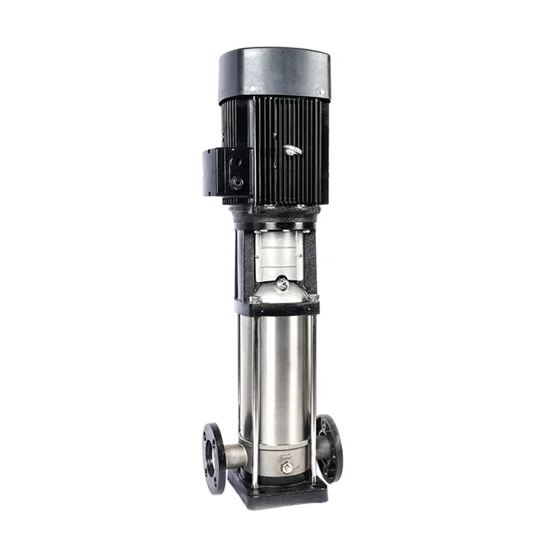
Description
Unlike single-stage centrifugal pumps, which have only one impeller, the multistage design incorporates multiple impellers stacked vertically within the pump casing. Each impeller is connected to a common shaft, and the DN32 outlet 2-4hp vertical multistage water pump is typically driven by an electric motor.
Features:
- Excellent hydraulic model and advanced manufacturing technology, greatly improve the performance and service life of the pump.
- Mechanical seals made of using hard alloy and fluorine rubber, improving the reliability of operation and the temperature of the transport medium.
- Compact structure, small size, lightweight, low noise, significant energy-saving effect, convenient maintenance.
- The inlet and outlet of the pump are located on the same level and can be directly used in the pipeline.
Specification:
| Model | ATO-32CDLF |
| Material | stainless steel |
| Motor | 100% copper wire, full power |
| Moter Voltage | 3 phase 380V-415V (single phase 220V for 2.2 kW or less); other voltages, contact us |
| Frequency | 50 Hz |
| Impeller | vortex impeller |
| Outlet Diameter | DN32 |
| Flow Rate | 4m3/h |
| Power | 1.5 kW (2 HP); 2.2 kW (3 HP); 3 kW (4 HP) |
| Head | 64m; 81m, 95m; 112m |
| Net Weight | 33kg; 37kg, 38kg; 46kg |
| Waterproof Grade | IP55 |
| Certification | CE |
Structure:
Mounting Dimension (Unit: mm)
| Model | B1 | B2 | B1+B2 | D1 | D2 |
| CDLF4-8–32CDL(F)4-80 (1.5kW) | 458 | 290 | 748 | 190 | 155 |
| CDLF4-10–32CDL(F)4-100 (2.2kW) | 512 | 290 | 802 | 190 | 155 |
| CDLF4-12–32CDL(F)4-120 (2.2kW) | 566 | 290 | 856 | 190 | 155 |
| CDLF4-14–32CDL(F)4-140 (3kW) | 630 | 345 | 975 | 197 | 165 |
Tips: How to Maintain Vertical Multistage Centrifugal Pump?
- Regular Inspection. Check for leaks, unusual vibrations, and excessive noise during operation.
- Lubrication. Ensure proper lubrication of bearings and mechanical seals as per manufacturer’s recommendations.
- Impeller Inspection. Inspect impellers for wear or damage, and replace if necessary to maintain efficiency.
- Shaft Alignment. Regularly check and adjust shaft alignment to prevent premature wear and vibrations.
- Seals and Gaskets. Monitor and replace seals and gaskets if they show signs of leakage or wear.
- Motor Maintenance. Maintain the motor by checking connections, cleaning, and servicing according to manufacturer guidelines.
- Cleaning. Regularly clean the pump and its components to prevent clogs and buildup.
- Monitor Performance. Track pump performance using pressure and flow measurements to identify deviations from normal operation.
- Vibration Analysis. Perform vibration analysis to detect any issues with the pump’s internal components.
Reviews
There are no reviews yet.